Six Tips for Spring Lawn Care
If you give your lawn a little special attention this spring, it will be easier to keep lush and green into summer and fall. Here's a recipe for a spring lawn tune-up. Exact timing of what you do will vary depending on where you live and whether you have a warm-season or cool-season lawn. But in most areas you can begin this month. For exact timing, check with your local nursery.
Fertilize. If you haven't done so already, apply a high-nitrogen lawn fertilizer.
Control Grubs. In many parts of the country grubs wreak havoc with lawns in the spring. They eat the roots of your lawn, which can destroy your entire lawn if left untreated. If you think you have grubs, try one application of Bayer Advanced™ Season-Long Grub Control Plus Turf Revitalizer Granules — guaranteed to kill more grubs, all season.
Control weeds. Weeds compete with grasses for water and nutrients and make your lawn look lousy. A well cared-for, vigorous lawn will resist weed invasions, but if you're having problems, use Bayer Advanced™ All-In-One Weed Killer for Lawns Concentrate (product discontinued). It kills lawn weeds like dandelions and clover, plus grassy weeds, like crabgrass and nutgrass, in one easy step. For St. Augustine lawns and other Southern lawns, use Bayer Advanced™ Southern Weed Killer for Lawns Ready-To-Use to control your broadleaf weeds. Both control your lawn weeds without harming your lawn when used as directed.
Aerate. Aerating, which removes small cores of soil, is one of the  best things you can do for your lawn. It improves water and nutrient penetration, increases the amount of air that reaches the roots, and helps reduce thatch (see below). You can hire a lawn service to aerate your lawn, or rent a power aerator from a local rental yard and do it yourself.
Dethatch. Thatch is a dense layer of organic matter that forms between the leaves and roots of your lawn. If it gets over a 1/2-inch thick, it prevents air, water and nutrients from reaching the roots and the lawn begins to suffer. You know you have thatch when your lawn has a spongy feel when you walk on it; or when you turn on the sprinklers, the water is slow to be absorbed and runs into the gutter. You can also check for thatch by cutting a slice out of your lawn with a shovel and examining between the leaves and roots.
If you have a small lawn, you may be able to remove thatch with a thatching rake, but it's hard work. A simpler solution is to rent a power rake or dethatcher from a local rental yard. It easily rips out thatch but does leave a lot of debris to rake up.
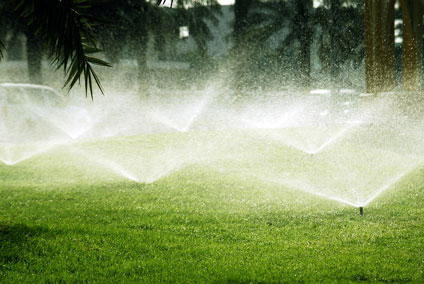
Check sprinklers. If you have an automated sprinkler system, turn it on and watch it run. Make sure each sprinkler is properly adjusted so the lawn is evenly watered and no water is wasted.
Fix or replace damaged sprinkler heads.
Water properly. Don’t start watering until you’re sure your lawn needs it (you’ll notice a change in color from bright green to dull gray-green). Waiting as long as possible will encourage deeper roots and better drought tolerance later. When you do water, wet the soil to a depth of about 6 — 8 inches (check by probing the soil with a stiff wire; it will move easily through moist soil and stop when it reaches dry), then don’t water again until the soil has partially dried. This time a year that should be at least a week in most areas.
Article from http://www.bayeradvanced.com/article/spring-lawn-care-tips.html.
Five Tips for Greener Grass and Saving Watering Dollars
Minnesotans wait patiently through the snow for the green grass of summer. Here are five tips for watering your lawn and saving water expenses at the same time.
• Water falling from the sky is perfect for your lawn. Have you thought about using the water that runs off of your roof? You can capture this water in rain barrels connected to your downspouts. When you water your plants and gardens, use the water from the rain barrels.
• The sun can be your enemy when it comes to watering your lawn. Put water on your lawn in the middle of the day and most of it evaporates. Water your lawn at dusk or dawn to actually get the water to the roots of your grass.
• Do you have hills in your yard? If so, break up the watering pattern so that you are not just creating a runoff. A sure sign of this is water gathering at the curb side or running into a neighbor’s yard. For most lawns, you don’t need more than 30 minutes a day.
• If you are going to install a lawn sprinkling system, position the heads and zones for the areas that need the consistent water. These could be gardens, special landscaping plants or areas requiring more water. Drip systems also work well for specific areas.
• Sprinkling systems now have smart controllers. These controllers are connected to the weather station. They adjust to the soil conditions, hillsides, humidity, temperature and rainfall. Every 8 minutes the smart controller gets a read from the weather station. These controllers can be operated anywhere in your home.
Smart watering of your lawn can mean less water used and more savings for your pocketbook. And best of all, your lawn will look green and beautiful!
Dale Hurt